
For general earthquake action steps — what to do in the first 10 seconds, intensity scale, hotel and subway procedures — see the Japan Earthquake Safety Guide. This post covers Sapporo and Hokkaido-specific risks — in particular the scenarios that visitors from warmer climates are least prepared for.
The myth of the earthquake-free city — and what 2018 changed
Sapporo had long been considered one of Japan's lower-risk cities for major earthquakes. It sits further from the Pacific tectonic plate boundary than Tokyo or Osaka, and historical records of large direct-strike earthquakes beneath the city were limited.
6 September 2018, 3:07 am. That changed.
The 2018 Hokkaido Eastern Iburi Earthquake (M6.7)
A M6.7 earthquake struck in Hokkaido's Eastern Iburi region, recording seismic intensity 7 — the maximum on the Japanese scale — in Atsuma Town. Central Sapporo experienced intensity 4 to 5 Lower. The shaking was serious. But the shaking was not what defined this earthquake.
2.95 million homes across Hokkaido lost power simultaneously — the largest blackout in Japanese history.
The Tomato Atsuma thermal power station, which supplied approximately half of Hokkaido's electricity, automatically shut down after sustaining earthquake damage. The cascade failure that followed took down the entire Hokkaido power grid. Traffic signals went dark. Subways stopped. Convenience stores ran out of food within hours. Hospitals ran on emergency generators. The blackout lasted up to 45 hours in some areas.
For travellers in Sapporo, this event reveals a risk profile unlike any other major Japanese city.
Sapporo's three unique risks
Risk 1 — Large-scale blackout
As 2018 demonstrated, Hokkaido's power grid structure makes it vulnerable to a wide-area simultaneous outage following a significant earthquake. The cascade scenario — traffic signals dark, subways stopped, underground malls in complete darkness, smartphones running out of battery with no way to charge — is something to visualise and plan for before you arrive in Sapporo.
What a blackout means practically for travellers:
- Cash only. Card terminals and ATMs require power.
- No subway. JR Hokkaido lines restore earlier using emergency generators.
- Dark intersections — treat every crossing as an uncontrolled intersection.
- Underground shopping areas (Aurora Town, Pole Town) go completely dark — know the exit locations before you go in.
Risk 2 — Winter compound disasters (November to March)
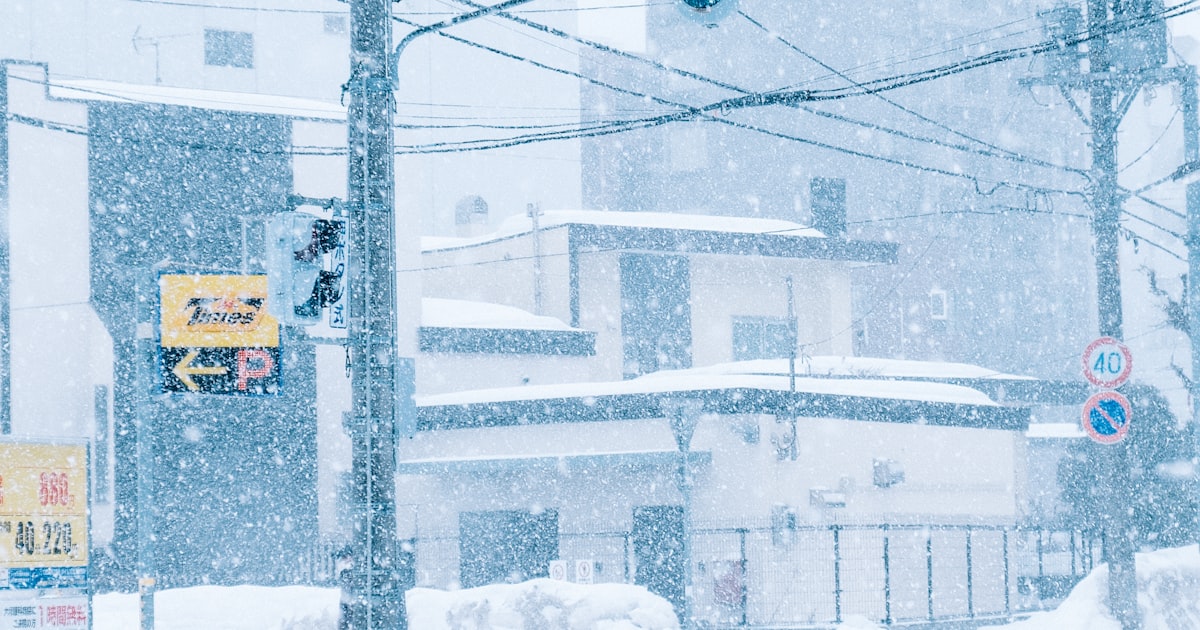
Sapporo receives approximately 4–6 metres of snow accumulation per season. When an earthquake occurs during heavy snowfall or icy conditions:
- Falling on icy roads during evacuation is a major injury risk — move slowly and deliberately.
- Heavy winter clothing restricts movement and slows evacuation.
- Snow load on roofs can shift and fall (roof snow avalanche) during shaking — do not stand close to building eaves in winter.
- Emergency exit signs can be obscured by snow drifts.
Risk 3 — Soft ground and liquefaction
Parts of Sapporo's lower-lying districts — including areas of Shiroishi, Toyohira, and Kiyota wards — were built on former riverbed and reclaimed marshy ground. The 2018 earthquake caused significant liquefaction in the Yufutsu area southeast of Sapporo, and some road subsidence occurred within the city. If you are staying or travelling in these eastern low-lying wards, the ground may behave differently from central Sapporo during strong shaking.
Seasonal risk summary
| Season | Additional risks | Key adjustment |
|---|---|---|
| November – March (winter) | Snowfall, roof avalanche, icy roads, cold exposure | Prioritise indoor shelter; minimise outdoor movement |
| April – May (spring) | Unstable ground from snowmelt | Caution near riverbanks and slopes |
| June – October (summer/autumn) | Possible typhoon combination | Standard evacuation rules apply |
| Year-round | Blackout potential | Carry a power bank and small torch |
What to do at Sapporo's top tourist spots
🌸 Odori Park (大通公園)
A 105-metre-wide, 1.5-kilometre-long open park running east to west through central Sapporo. During an earthquake, Odori Park is the safest open assembly area in central Sapporo.
- If you are already in the park: move to the centre, away from trees and park structures.
- If you are in the underground malls directly below (Aurora Town, Pole Town): use the nearest staircase to reach street level and cross into the park.
- In winter: snow sculptures and seasonal installations can collapse — stay in the clear central path rather than near structures.
🍻 Susukino (すすきの)
Sapporo's largest entertainment district, immediately south of Odori Park. Dense with large neon signs, heavy commercial signage, and narrow side streets running between the main road.
The risks:
- Large illuminated signs and structural fixtures above Susukino Intersection can fall during strong shaking.
- Narrow back-street bars and clubs concentrate crowds; panic in an enclosed space is dangerous.
- Late-night concentration of people in altered states complicates orderly evacuation.
What to do:
- If you are near the main Susukino intersection, move away from building facades and signage — step into the roadway centre.
- Move north toward Odori Park, which is the designated open assembly area.
- Sapporo Factory (brick building, several blocks east): exit immediately — the open central atrium inside is a secondary assembly option if the park is unreachable.
🏛️ Former Hokkaido Government Building (赤れんが庁舎 — Red Brick Building)
Completed in 1888. The red brick exterior is historically significant — and structurally vulnerable.
- Unreinforced brick buildings have poor earthquake performance. Bricks can dislodge from walls and cornices during strong shaking.
- Do not stand directly against the exterior walls or beneath any overhanging brickwork.
- If you are inside or on the grounds, move immediately to the open lawn area in front of the building — the Hokkaido Government complex grounds provide ample open space.
🕰️ Sapporo Clock Tower (時計台)
Built in 1878 — traditional timber construction, similar in nature to Kyoto's historic structures.
- If inside, exit immediately through the main entrance.
- The Clock Tower is surrounded by modern high-rise buildings — glass from upper floors can fall outward onto the street. Move away from building perimeters.
- Once outside, head directly toward Odori Park (two blocks north).
🚢 Otaru Canal (小樽運河)
Thirty minutes from Sapporo by train. The canal's famous stone warehouse buildings date from the late 19th and early 20th centuries.
The risks:
- These historic stone warehouses were built without seismic engineering. Stone walls and roof structures can collapse during strong shaking.
- The narrow pedestrian path running along the canal has stone walls on both sides — a collapsed wall blocks the only exit route.
- Otaru is a smaller city with more limited emergency infrastructure than Sapporo.
What to do:
- Move away from the warehouse buildings immediately — cross to the far side of the canal path.
- Exit the canal walkway onto the wider inland road (Chuo-dori) rather than staying along the waterfront.
- Use Otaru Station or Otaru Park as your evacuation assembly point.
🎿 Ski resorts (Niseko, Rusutsu, Sapporo International)
Hokkaido's ski resorts attract large numbers of international visitors — and a chairlift during an earthquake is one of the most exposed positions you can be in.
On a chairlift:
- Grip the safety bar firmly and do not attempt to jump — lifts typically stop automatically within seconds of strong shaking.
- Remain seated and wait for resort staff to arrive with evacuation procedures. Jumping from a stationary lift causes serious injury.
- Follow staff instructions for slow descent.
On a ski slope:
- Crouch low and stop skiing immediately.
- Be aware of other skiers around you — collision risk increases when people stop suddenly.
In a lodge or restaurant:
- Follow standard procedures (cover, hold on, wait for shaking to stop), then evacuate to the open exterior.
- In winter: keep your jacket and gloves on. Do not remove outerwear before exiting — cold exposure is a secondary hazard.
If the power goes out — Sapporo-specific actions
A blackout lasting hours — or longer — requires different decisions than a standard post-earthquake response.
Immediately:
- Reduce your phone screen brightness to minimum and switch to battery-saving mode.
- Connect to a power bank immediately — do not wait until the battery is low.
- If you are in your hotel room, do not use the elevator. Elevators can trap occupants when power fluctuates. Use the stairs.
- Count your cash. Card terminals and ATMs will not function until power is restored.
If the blackout extends beyond a few hours:
- Convenience store food sells out within hours, as in 2018. Secure water from your hotel bathroom taps while pressure holds.
- Ask your hotel whether they have a backup generator and how long it is rated to run.
- JR Hokkaido lines are typically the first public transport to resume, running on emergency power priority. Sapporo's subway requires full grid restoration.
- Treat all intersections as uncontrolled — stop completely and check both directions on foot before crossing.
A power bank and a small torch are worth carrying in Sapporo regardless of season. The 2018 blackout struck in early September — not deep winter, not a time most travellers would think to prepare for cold or darkness.
Before you go: quick checklist
- Carry a power bank (10,000 mAh or larger) — your phone is your primary information source if the grid fails
- Carry cash — ATMs and card terminals require electricity
- If visiting in winter, keep gloves and a hat accessible in your bag at all times — outdoor evacuation in a Sapporo winter without them is a cold-exposure risk
- Save the location of Odori Park before you arrive — it is reachable on foot from most central accommodation within 10 minutes and is the main open assembly area
- Save your country's embassy or consulate number before departure
- Download the JNTO Safety Tips app for multilingual earthquake and tsunami alerts
Official resources
- JMA Earthquake Information (English) — jma.go.jp/bosai/earthquake
- Sapporo City Disaster Prevention — city.sapporo.jp/kikikanri (shelter map)
- JR Hokkaido Train Status — jrhokkaido.co.jp
- JNTO Tourist Helpline — 050-3816-2787 (24/7, multilingual)
Related guides